

7 Days 6 Nights
Daily Tour
50 people
___
| Semi Deluxe | ||
|---|---|---|
| ADULT | CHILD | INFANT |
| ₹36,999.00 | ₹0.00 | ₹0.00 |
| Deluxe | ||
| ADULT | CHILD | INFANT |
| ₹37,999.00 | ₹0.00 | ₹0.00 |
| Super Deluxe | ||
| ADULT | CHILD | INFANT |
| ₹41,499.00 | ₹0.00 | ₹0.00 |
| Luxury | ||
| ADULT | CHILD | INFANT |
| ₹79,999.00 | ₹0.00 | ₹0.00 |
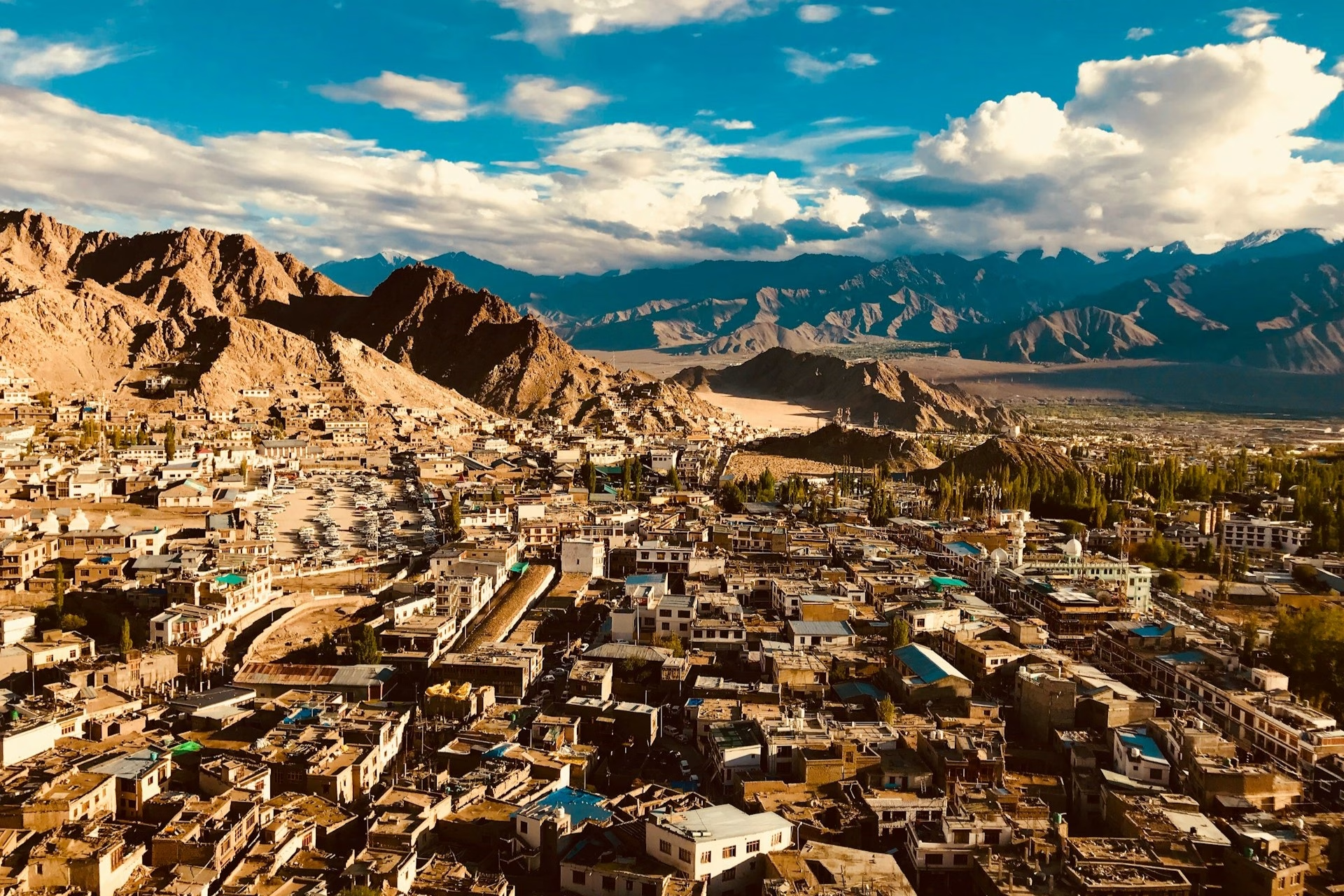
Altitude: 3500 m
We will pick you up from the airport and transfer you to your hotel in Leh. After check-in and freshening up, spend the day resting and acclimatising to the high altitude.
Meals: Dinner
Night: Stay at the hotel in Leh
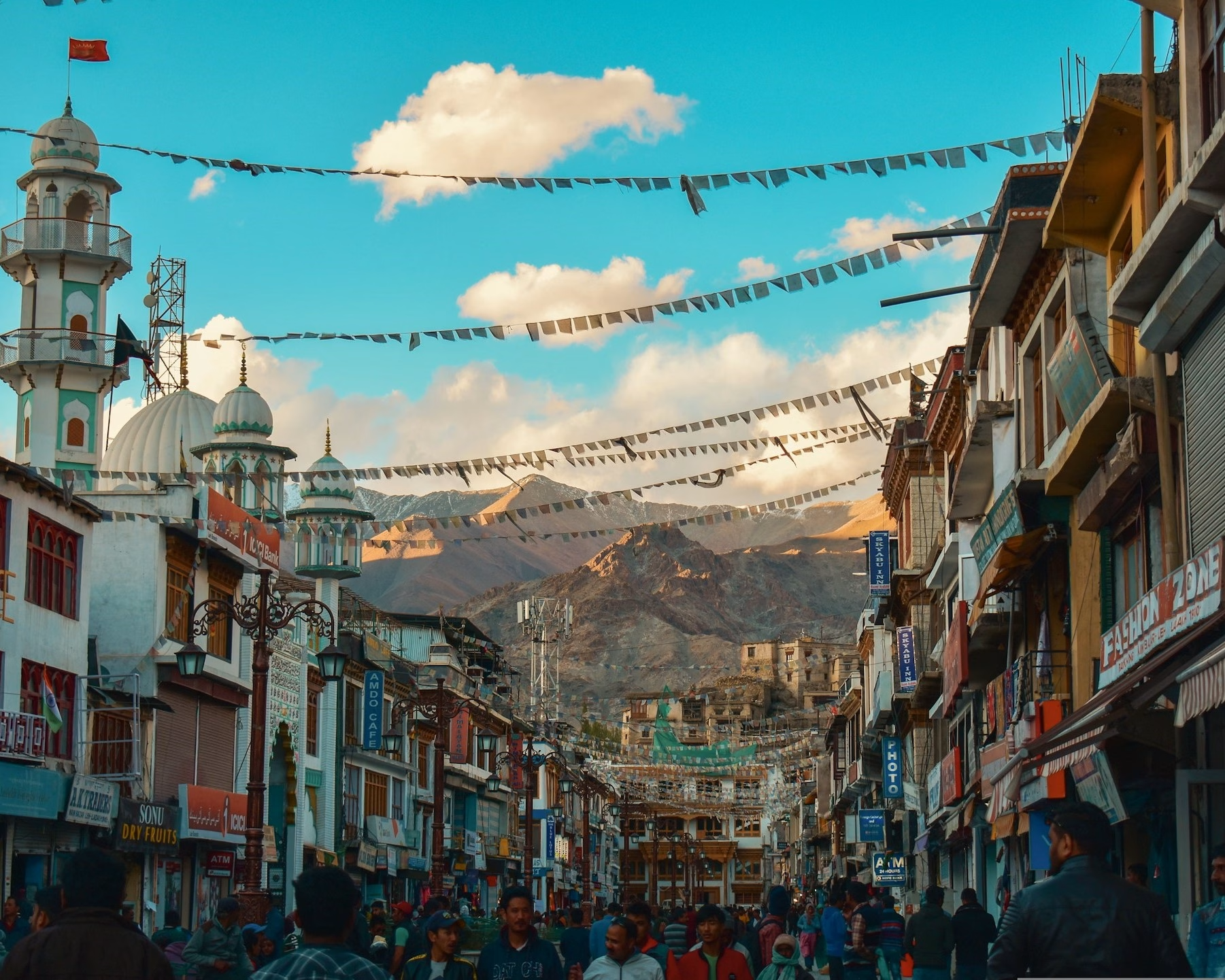
Dist: 70 km to 90 km | Altitude: 3300 m to 2600 m.
After breakfast, you will go sightseeing locally, visiting the Leh Palace, Shanti Stupa, Hall of Fame, Spituk Monastery, Gurudwara, Magnetic Hill, Sangam, and Rafting Point. In the evening, you will return to your accommodation.
Meals: Breakfast, Dinner
Night: Stay at the hotel in Leh
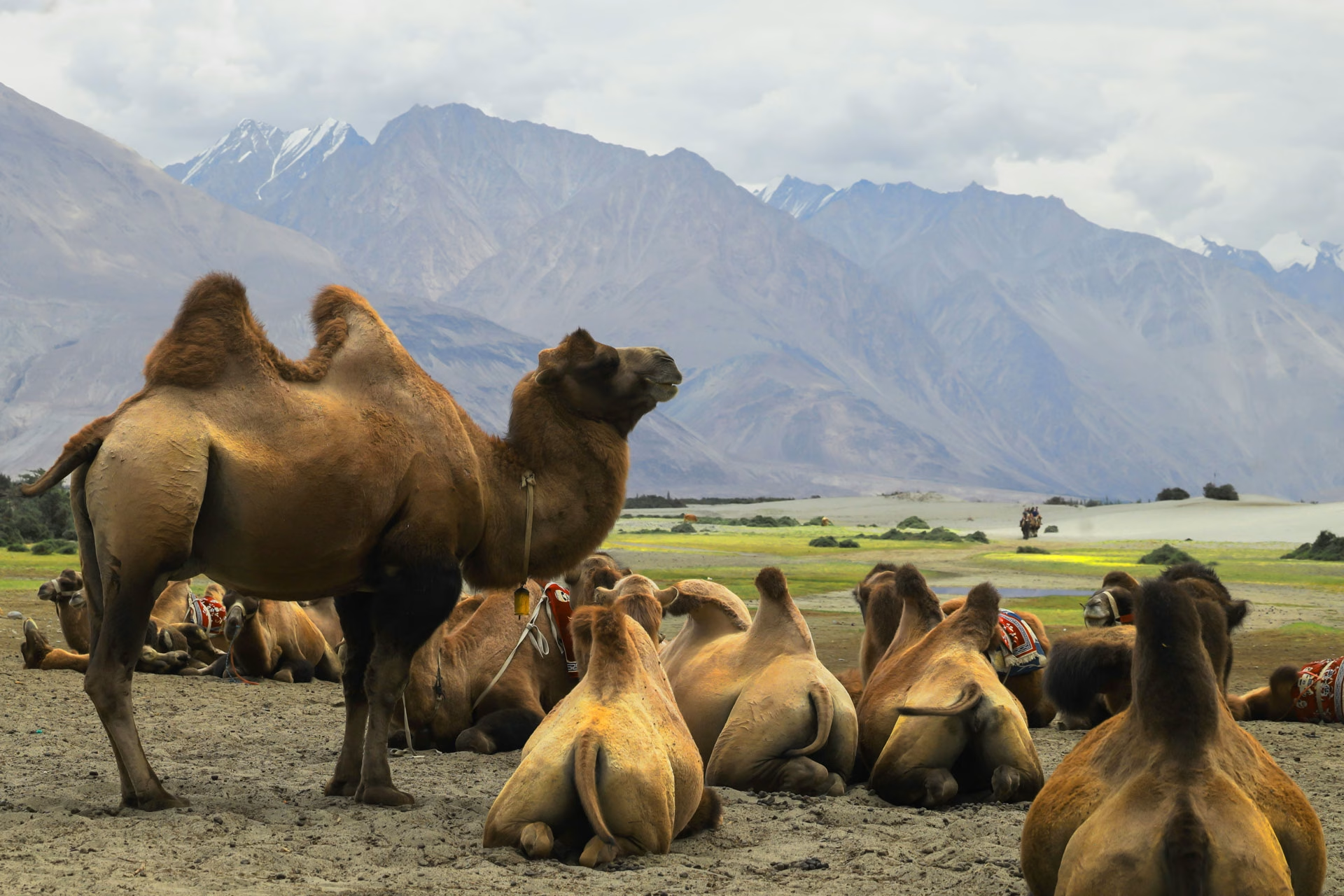
Dist: 160 km | Altitude: 3500 m to 5354 m
After breakfast, you will head towards Nubra Valley via the Highest Motorable Pass, Khardung La. You will also visit Diskit Monastery, Hunder Village, Sandunes, and Camel Ride Point. After exploring these places, you will check Into your accommodation at Nubra Valley.
Meals: Breakfast, Dinner
Night: Stay at a hotel/homestay in Nubra Valley
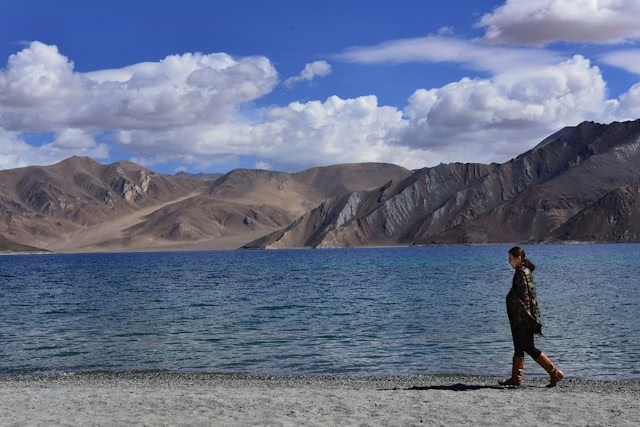
Dist: 200 km | Altitude: 3100 m to 4814 m
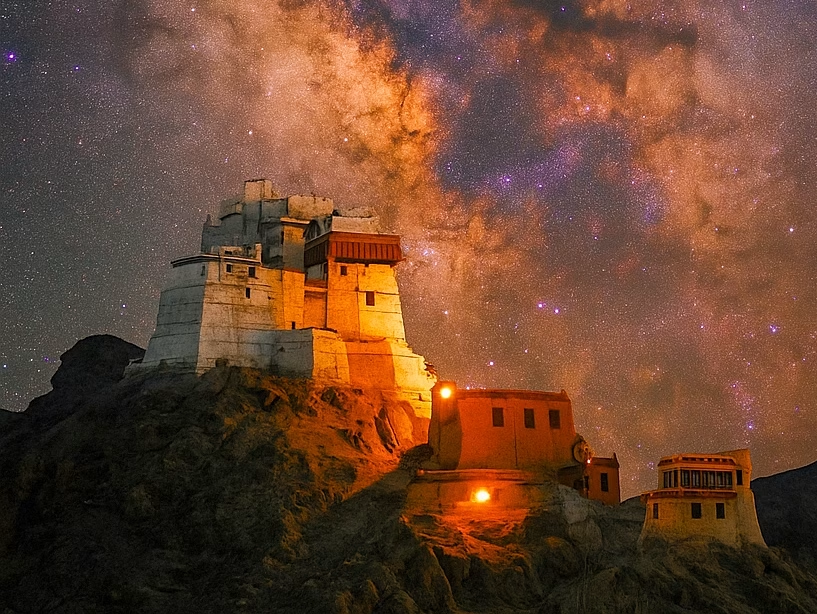
After waking up to a beautiful view of the Karakoram mountains and eating breakfast, you will continue towards Pangong Tso, a high-altitude saltwater lake, and visit Shayok, Durbuk, and Tangsay Village.
Meals: Breakfast, Dinner
Night: Stay at the cottage/camps in Pangong Tso
Dist: 309 km | Altitude: 4814 m to 4500 m
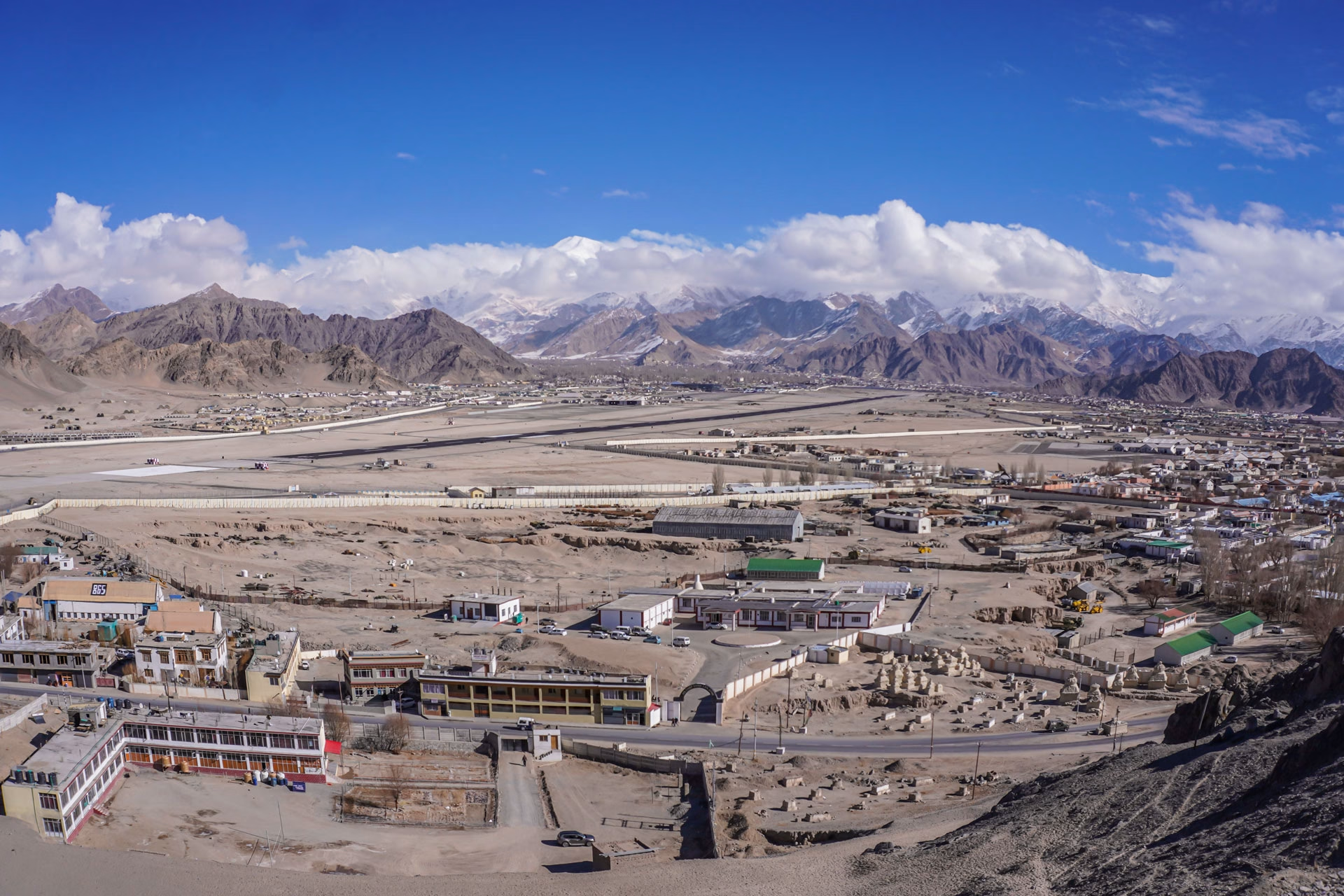
After breakfast today, you will drive towards Hanley via Saga La Pass. Later in the evening, you will check into the hotel/homestay in Hanley, a serene village known for its observatory and remote Himalayan beauty.
Meals: Breakfast, Dinner
Night: Stay at the homestay/Hotel in Hanley
Dist: 313 km | Altitude: 4500 m to 3500 m
Today, after having your breakfast, you will drive towards Hanley. You will head towards Leh, and on the way, you will visit Thiksey Monastery, Rancho School, and Shey Palace. After that, you will check into your accommodation in Leh.
Meals: Breakfast, Dinner
Night: Stay at the Hotel in Leh
Checkout: 10:00 am
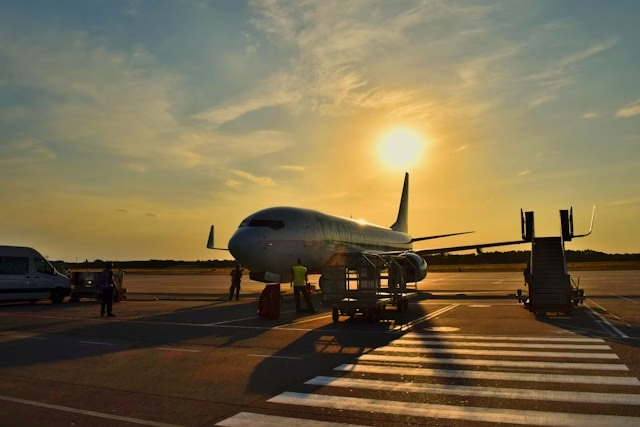
It's time to say goodbye to this fantastic tour. After breakfast, you will head towards Leh airport with many memories to cherish forever. We hope to see you again on another unforgettable journey.
Meals: Breakfast
Night: Nil
Location | Places to visit |
Leh | Hall of the fame War memorial, Shey Monastery, Thiksey Monastery, Shanti Stupa, Leh Palace, Leh Market, Gurudwara Patthar Sahib, Magnetic Hill, Rafting Point. |
Nubra | Khardung La, Diskit Village, Diskit Monastery, Sand Dunes, Camel Ride Point, Hunder, Shyok River. |
Pangong Tso | Shayok, Durbuk, Tangsay Village, Pangong Lake, Chang la Pass. |
Hanley | Tsaka LA, Hanle Monastery, Hanle Observatory, Hanle Valley, Hanle Lake |
Note:
Leh
Semi Deluxe | Borgo Villa, Jeevanam Villa |
Deluxe | Nature’s Land, Hotel Lalingkha, Hotel Bluestone, Mahey Retreat, Maple Ladakh |
Super Deluxe | Himalayan Retreat Karzoo, Hotel Spa, Charu Palace, The Kaal |
Nubra
Semi Deluxe | Nubra Boutique Camp, Royal Mount, Pika Camp, Weeping Willow Camp |
Deluxe | Paramount Camp, Ladakh Elysium Camp, Urth Home Boutique |
Super Deluxe | Paramount Super Deluxe, Urth Home Boutique |
Pangong
Semi Deluxe | White Heaven Cottage, Mystic Mountain Cottage, Native Retreat Cottage |
Deluxe | Zamta View Point, Native Retreat Cottage, Star Sherathon Cottage |
Super Deluxe | Snowpine Wooden Cottage, Gongma Residency, Polarise Cottage |
Hanley
Semi Deluxe | Padma Homestay, Ama Cottage |
Deluxe | Padma Homestay, Umlingla Residency |
Super Deluxe | Umlingla Residency, Royal Rebo |
We understand that plans can change, but the booking amount is non-refundable due to the costs we incur in preparing for your tour or activity. If you wish to reschedule for a different date, we'll adjust it to the same package, providing you with the necessary flexibility.
If you have paid the total amount but canceled the package. You will be provided with a refund, as mentioned below:
Tours or activities may be canceled due to unforeseen events beyond our control, weather conditions such as heavy rain or storms, or government restrictions like sudden closures of specific areas. In such a scenario, we will provide an alternate tour or activity. However, no refunds will be provided.
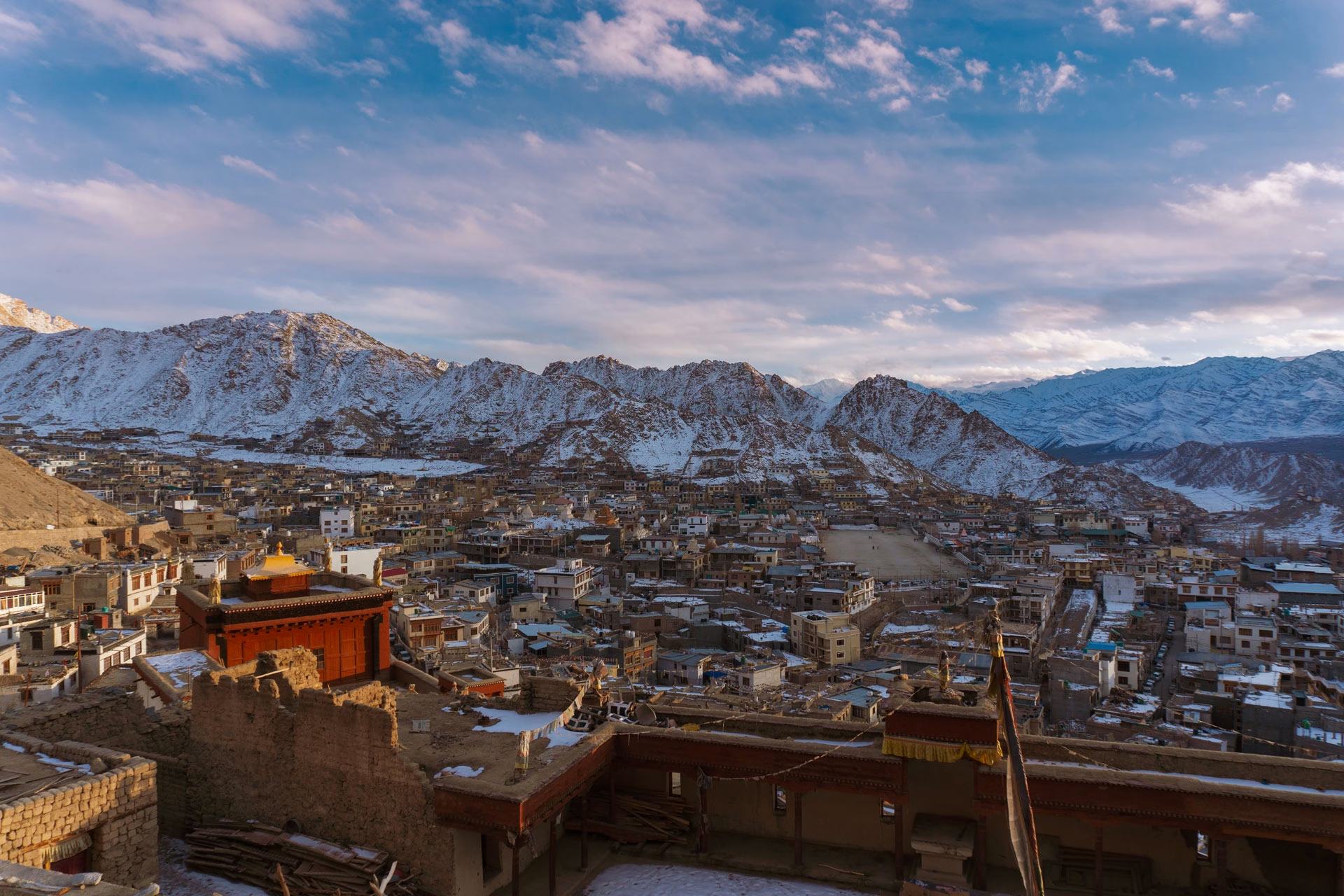
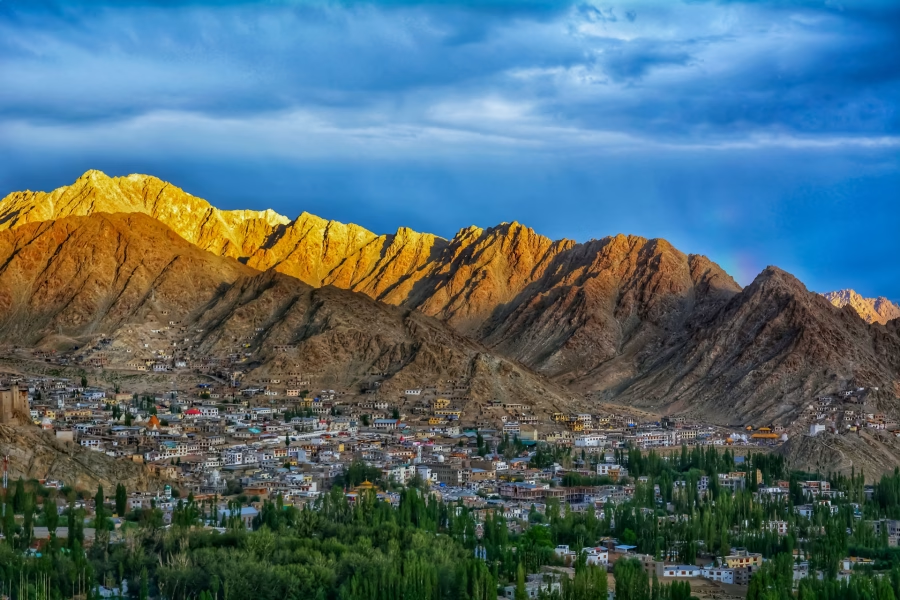
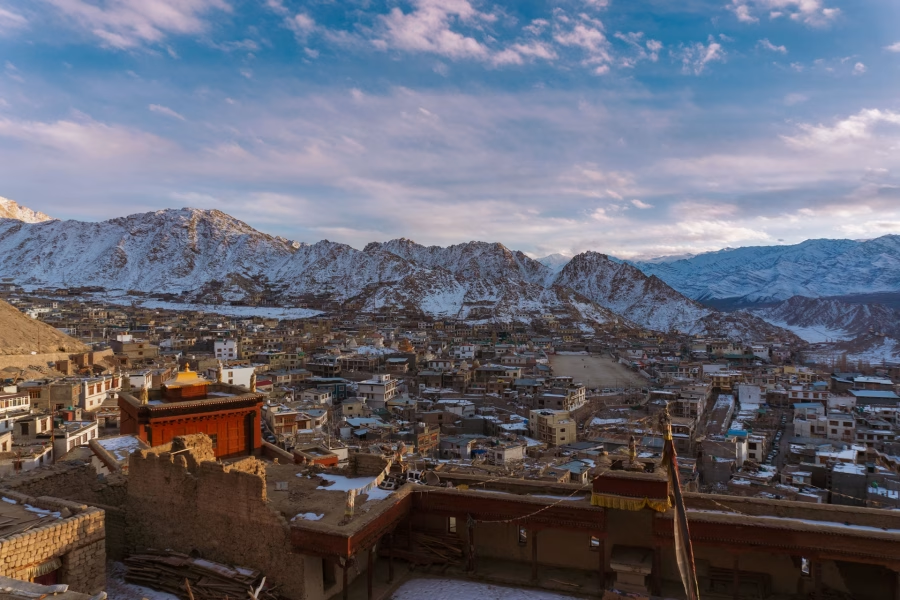
Leh is a district in the Indian union territory of Ladakh. It is the largest and most populated area in Ladakh, with Leh town as its main center. Located at about 3,524 meters above sea level, Leh is surrounded by tall mountains and beautiful valleys. The district has many small towns and villages, and people here follow different religions like Buddhism, Hinduism, and Islam. Leh is famous for its stunning lakes such as Pangong Tso and Tso Moriri, and its old monasteries like Hemis and Thiksey. It has an airport called Kushok Bakula Rimpochee Airport and is also connected by the Jammu-Srinagar highway. The Leh Nubra Pangong Hanley Tour offers travelers a chance to explore this beautiful region and experience its unique culture, landscapes, and traditions.
Nubra Valley: The Leh Nubra Pangong Hanley Tour is a beautiful journey through some of Ladakh’s most stunning places. Starting in Leh, located high in the Himalayas, you can explore its peaceful monasteries and unique culture. Nubra Valley offers amazing mountain views, sand dunes, and warm hospitality from the local Dumra people. Pangong Lake, famous for its changing blue shades, is one of the most breathtaking sights in Ladakh. Hanley, a peaceful village known for its observatory and starry skies, gives you a chance to experience the calm beauty of remote Ladakh. This tour is perfect for nature lovers, adventure seekers, and anyone who wants to see the true charm of the Himalayas.
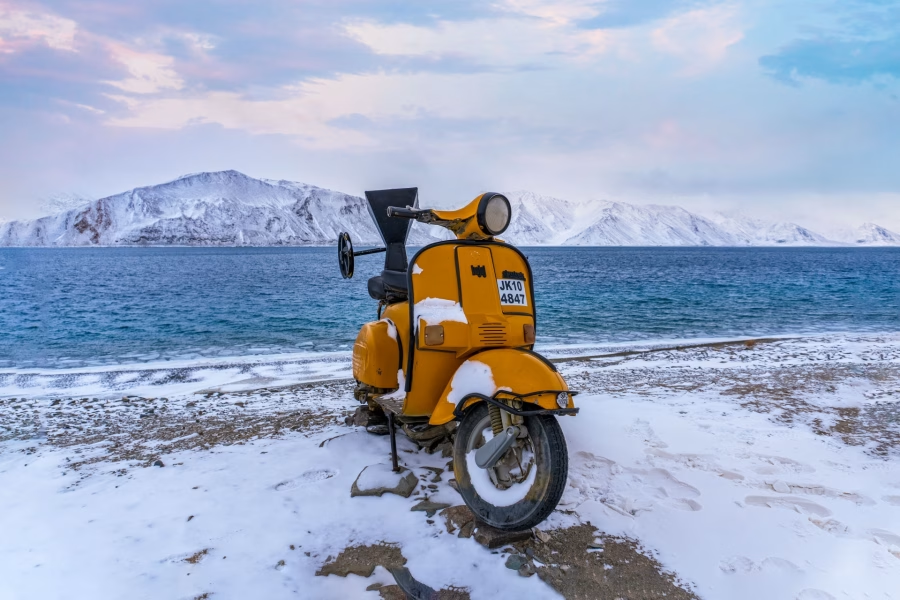
Pangong Tso is a beautiful lake in the Himalayas, situated in the Ladakh region. It lies at an altitude of 4,250 meters (13,944 feet) and is one of the highest lakes in the world. The lake covers an area of about 604 km² (233 sq mi) and is about 5 km (3.2 mi) wide at its broadest point. Two-thirds of the lake lies in Tibet, while the remaining part is in India. The lake has an average depth of about 60 meters (196 feet) and completely freezes during winter. Pangong Tso is home to various fish species, including snow trout, and the area around it offers breathtaking views of the surrounding mountains. It is one of the most popular destinations for Indian and international tourists, with nearby attractions like Thiksey Monastery and Hemis Monastery. The Leh Nubra Pangong Hanley Tour allows travelers to experience the serene beauty of Pangong Tso along with other stunning locations in Ladakh.
Hanley: Hanley is a small village about 4,500 meters (14,764 ft) above sea level. Hanle is located about 254.4 km from Leh town. Hanle is known for its unique culture and traditions, a mix of Tibetan and Indian influences. However, its culture is predominantly Tibetan, with most of its population Buddhist. The village is known for its spectacular natural beauty, majestic mountain peaks, stunning views of the Himalayas and observatory, the second highest in the world, and the picturesque Hanle Monastery. The specialities of Hanle include butter tea, locally produced handicrafts, traditional Tibetan clothing and jewellery, and a local alcoholic beverage made from barley.
How to reach
The Leh Nubra Pangong Hanley Tour Package is a popular package tour in India. The package includes the beautiful destinations of Leh, Nubra Valley, Pangong Lake and Hanley Valley. The journey starts from Leh, and the first stop is Nubra Valley. Nubra Valley is located around 150 km away from Leh, and you can reach it by hiring a cab or taking a bike ride. It takes around 4-5 hours to get to the valley. The valley is known for its lush green meadows, snow-capped mountains, dunes, and the Bactrian camel. After spending a day in Nubra Valley, you can continue your journey toward Pangong Lake. Pangong Lake is around 200 km from Leh and takes 6-7 hours to reach. The lake is situated at a height of about 14,270 feet above sea level. Once you explore Pangong Lake, you will go to Hanley Valley to explore the monasteries and Hanley Lake. After spending the night in Hanley, you can return to Leh and end your tour. The journey usually takes around 5-6 hours. The Leh Nubra Pangong Hanley Tour is a great way to explore the beauty of Ladakh and take in some fantastic views and experiences.
The Hall of Fame War Memorial is a war memorial located in the city of Leh in Ladakh, India. It was constructed in honour of the brave Indian Military Forces soldiers who gave their lives while performing their duties during the Indo-Pak Wars of 1947, 1965, and 1971. RK Mathur, the lieutenant governor of UT Ladakh, officially opened the memorial. The Monument consists of four structures shaped like crosses and spread across 1.5 acres. The two main buildings are dedicated to the soldiers who gave their lives as martyrs during the Indo-Pak Wars, and the other two are to the men who perished during the 1999 Kargil War. The memorial houses a museum, a library, a prayer hall, and a theatre. The museum showcases weapons, photographs, artefacts, and other memorabilia related to the Indo-Pak wars, while the library contains books, journals, and other documents related to the wars. The theatre is used to screen documentaries related to the wars and to hold lectures, seminars, and other educational programs. The monument also has a Flame of Immortality, lit daily to honour the martyrs.
Shey Monastery is a Buddhist monastery in the Leh district of Ladakh, India. A Ladakhi king founded it in the 17th century. On top of a hill, the monastery is located 15.3 kilometres (9.3 miles) south of Leh. After Thiksey Monastery, it is the second-largest monastery in Ladakh. The monastery houses a sizable collection of old-fashioned books, wall paintings, sculptures, and giant statues of Lord Buddha and other idols. The monastery’s primary draw is a massive statue of Shakyamuni Buddha sitting that is copper-gilded. The statue was installed in the monastery by the king in 1655. The monastery also houses a collection of thangka paintings, some of which are said to be over 300 years old. The monastery is surrounded by a 925-meter (3,035 ft) high wall connected to the main Leh-Manali road. The entrance gate of Shey Monastery is ornately decorated with dragon-headed figures. The monastery also has a small temple dedicated to the goddess Tara, considered a protector of Buddhism. The monastery is a popular tourist destination in Ladakh and attracts visitors from all over the world.
Thiksey Monastery is a Tibetan monastery in the Indus Valley of Ladakh, India. It is part of the Gelug school, the newest of the schools of Tibetan Buddhism. The monastery is regarded as a prime example of Ladakhi architecture. Around 19 kilometres east of Leh, the town of Thiksey is located above a hill. The monastery, associated with the Gelugpa style of Tibetan Buddhism, was established in the 15th century by Palden Sangpo. It is the biggest monastery in central Ladakh, with 12 levels and a remarkable collection of statues, stupas, murals, and swords. In the village of Thiksey, close to Leh, the main temple is 11,800 feet. In 1970, a statue of Maitreya, the coming Buddha, was constructed.
In contrast to the monastery, the complex has a religious order, a Tara shrine, a library, and several stores. Other attractions include a spectacular view of the Indus Valley and the Stok Kangri mountain range. The monastery hosts a three-day festival of masked dances and music every summer. The monastery is also home to more than 150 monks who are responsible for its daily operations. The monks live in small cells, and the monastery provides primary education and health care services to the local community. The monastery is open to visitors throughout the year and can be reached by road or air. Tourists can visit the monastery to learn more about Tibetan Buddhism and to enjoy the breathtaking views of the surrounding landscape.
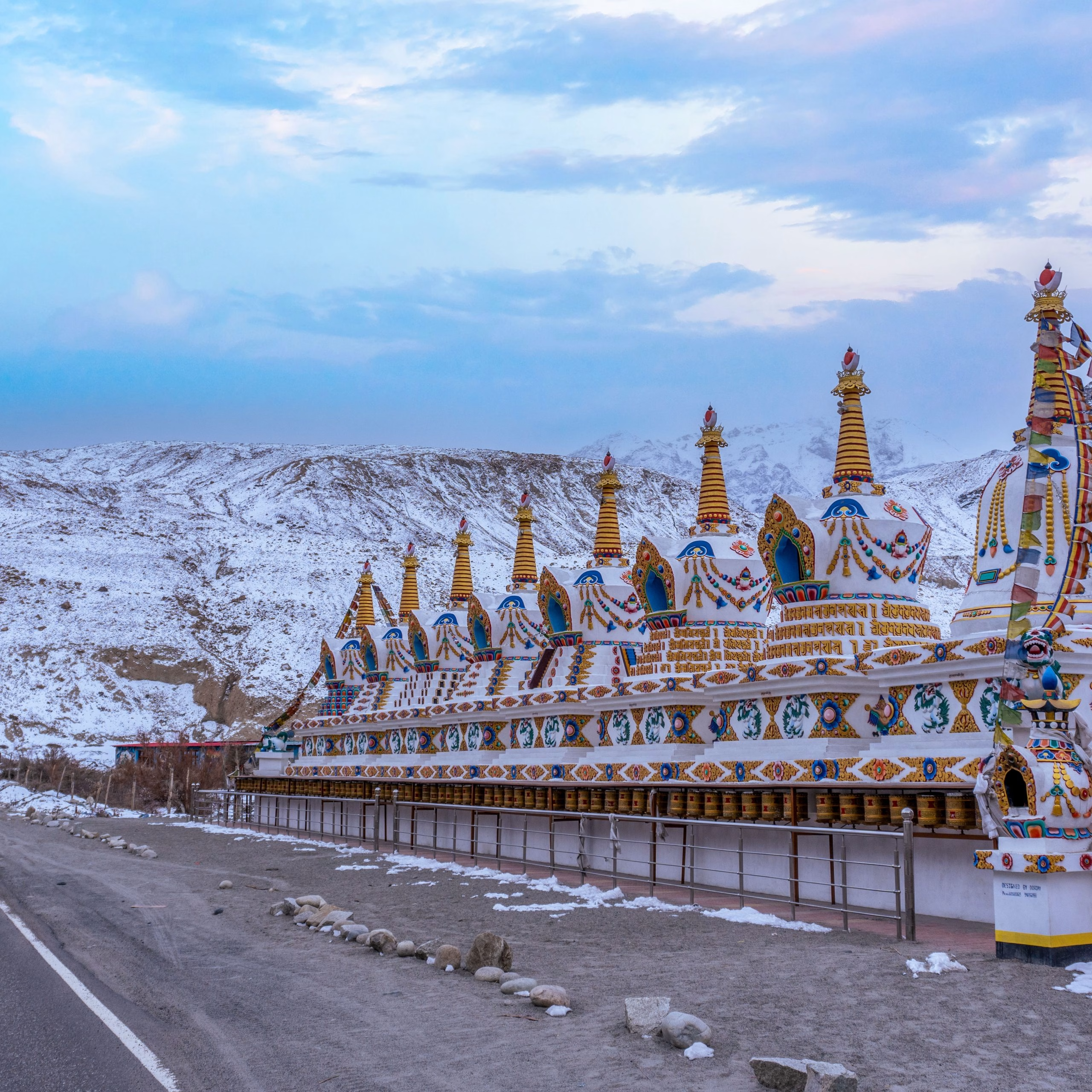
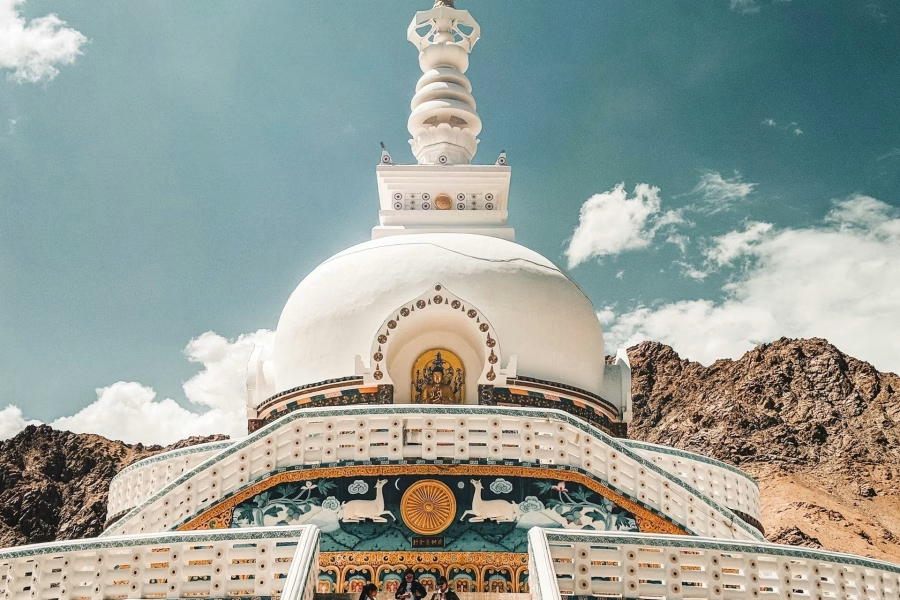
The Shanti Stupa is a stunning white-domed Buddhist stupa located on a hilltop in Chanspa, in the Leh district of Ladakh, India. It is considered to be an important symbol of Buddhism in the region. The stupa is at an altitude of 3,609 meters (11,841 ft) above sea level and overlooks the town of Leh and the Leh Palace. It is built on a raised solid rock platform with two storeys. The upper storey is made of white marble and has a dome-shaped structure at the top with a gold-plated spire. The stupa’s base is surrounded by four small shrines, each with an image of the Buddha. The purpose of the stupa is to promote world peace and prosperity. It is intended to serve as a reminder of the common bond that unites all humanity, regardless of race, religion, or nationality. The stupa is open to visitors all year round, and the views from the top are spectacular. It is a popular spot for sightseeing and meditation.
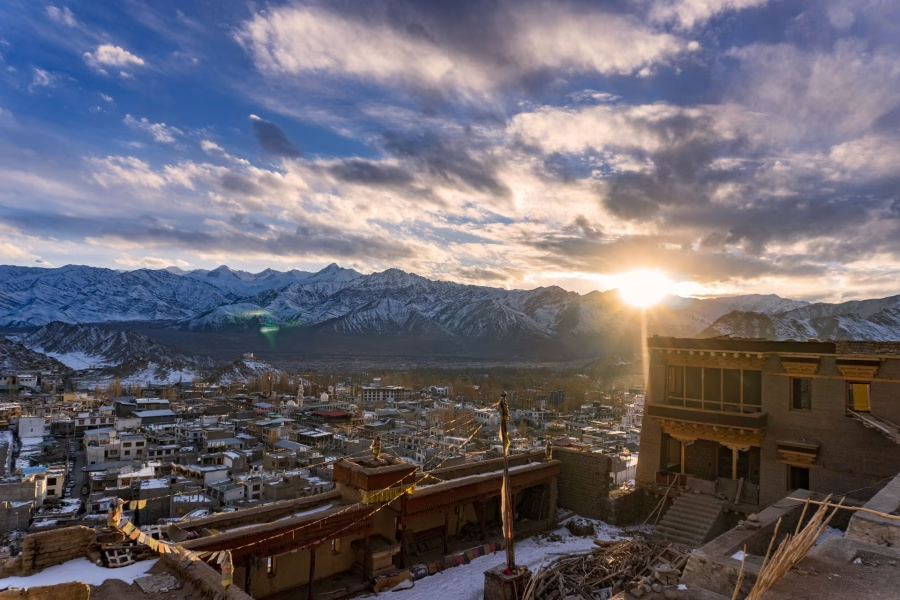
Leh Palace is an old royal residence that stands above Leh. It was built in the 16th century by King Sengge Namgyal and is a nine-storey palace that is now a museum and a popular tourist attraction. The castle is built in the Tibetan style with a blend of Indian architecture and is 3,500 meters above sea level. It is said that the palace was once the home of the Namgyal dynasty, the former rulers of the region. Its architecture reflects the culture and heritage of the area, with its intricate carvings and colourful murals. The Leh Palace was damaged during the 1947–1948 Indo–Pakistani war, and the royal family later abandoned it. In 1975, it was named a protected monument, and in 1990, it was opened to the public as a museum. Since then, it has become a significant tourist destination and a well-liked location for photographs. The palace is home to several attractions and monuments that highlight the history and culture of the area. They include traditional clothing and jewellery, books, images, paintings representing the palace and its royal family, and manuscripts. The Leh Palace also has a library, where visitors can find books about the region’s history. Apart from this, it also houses a temple dedicated to the guardian deity of the royal family.
Leh Market is a popular shopping destination in Leh, India. It is a vibrant market with various items for sale, including traditional and contemporary handicrafts, garments, spices, jewellery, and much more. The market is located in the Old Town of Leh and has been popular with locals and tourists for centuries. The traditional items are all handmade by the locals, and each item is unique, giving shoppers an exceptional experience. There are also a variety of spices, vegetables, fruits and traditional foods like momos and thukpa. The market is also a great place to find souvenirs and gifts. Many handicrafts, jewellery, and clothing items can be customised with names and messages, making them ideal for any special occasion or event. The market is open daily, with many festivals and events yearly. This makes it a great place to visit year-round. Leh Market is an excellent place to visit for a unique shopping experience. Whether you’re looking for traditional items from the region or something more modern, you will find something to take home.
Magnetic Hill in Leh is a famous tourist spot known for its curious optical illusion. Located around 30 kilometres from Leh City on the Leh-Kargil-Baltic National Highway, the hill has a magnetic pull that can make vehicles roll uphill against gravity. However, this is just an optical illusion caused by how the land is shaped, making a slight downhill slope appear uphill. Even with this scientific explanation, Magnetic Hill remains a fascinating place for visitors, adding a bit of mystery to the beautiful scenery of Ladakh.
Khardung La is a mountain pass situated in the Ladakh region of India. It is located at an altitude of 5,349 meters above sea level and is the highest motorable pass in the world. The pass is a gateway to the Nubra valley. It is strategically important due to its proximity to the Siachen Glacier, the world’s second-longest glacier, located just north of the pass. The road to Khardung La is also known as the “highest motorable road in the world”. After being closed for a long time due to its strategic importance, the pass was finally made available to civilian traffic in 1988. Since then, it has developed into a well-liked vacation spot that receives thousands of visitors yearly. Any adventurous visitor to Ladakh must journey to Khardung La, considered one of the world’s most stunning and thrilling drives. In addition, there are four tiny villages in the past: Khalsar, Sumur, Khardung, and Turtuk. Local Changpa tribes recognised for their distinctive cultures and traditional attire live in these villages. Khardung La is a fantastic location for hiking and camping because magnificent snow-capped mountains surround it. The region has several trekking routes, the most popular being the Markha Valley trek. This trek takes you through some of the most stunning landscapes in the world and is an excellent experience for any adventure lover. Several monasteries are also located in and around Khardung La, which are worth visiting. The Diskit Monastery is well-known and a must-visit for everybody travelling to Ladakh. It is a beautiful way to see the beauty and culture of the area. It is situated only a few kilometres from the pass Khardung La.
Hanley Valley is a remote valley in eastern Ladakh, India. The valley is located in the Changthang region of Ladakh, close to the border with Tibet. The valley is renowned for its breathtaking landscape, featuring snow-capped mountains, alpine meadows, and pristine lakes. It is also home to wildlife, including snow leopards, blue sheep, and the rare Tibetan antelope. The area is also home to several Buddhist monasteries, allowing visitors to explore Ladakh’s rich culture and history. There are also many trekking and camping sites in the valley. The valley is famous for its breathtaking views of the surrounding mountains. It is also a popular destination for adventure seekers and nature lovers.
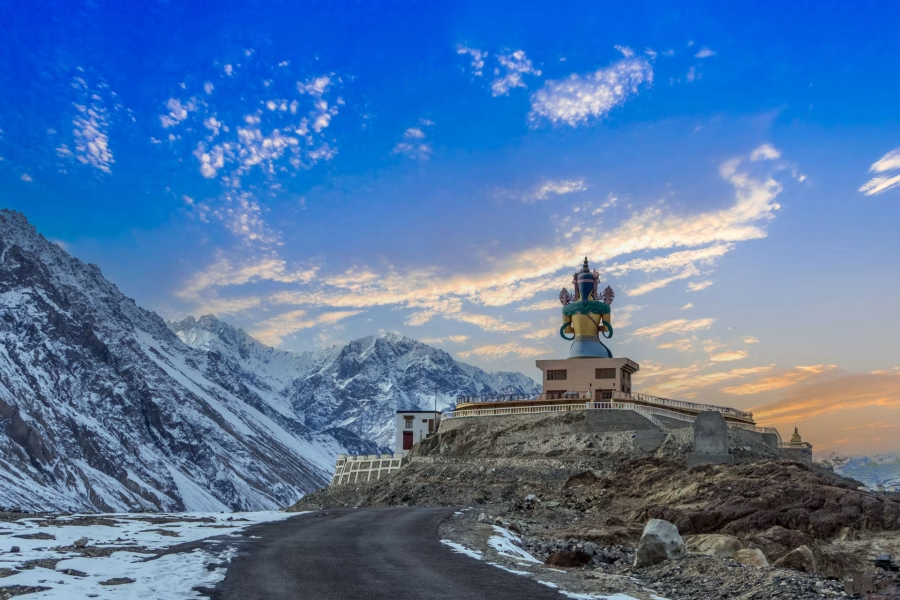
Diskit is a village located in India’s Nubra Valley of Ladakh. It is the largest village in the valley and serves as the Nubra tehsil’s administrative centre. It is roughly 150 kilometres north of Leh, the Ladakh region’s capital. The Shayok River, an Indus River tributary, situates the town. It is home to the Diskit Monastery, the oldest and most prominent Buddhist monastery in the Nubra Valley. It was established in the 14th century by Lama Sherab Zangpo of the Gelugpa sect. The monastery has a 26-meter-high statue of Maitreya, the Future Buddha. Diskit Village is also known for its spectacular views of the mountains, including the Ladakh Range, the Karakoram Range, and the Saser Kangri Peak. It is a popular tourist destination, with many hotels, guesthouses, and campsites available for visitors. The village is home to a diverse population, including Buddhists, Muslims, and Hindus. The people of Diskit Village are mainly engaged in agriculture, animal husbandry, and tourism. Animal husbandry is also common in the area, with yak, sheep, and goats being the primary sources of livelihood. Tourism is also an essential industry in the area, with many visitors coming to explore the region’s culture, scenery, and monasteries.
Diskit Monastery, also called Deskit Gompa or Diskit Gompa, is a Buddhist monastery in Diskit village, Nubra Valley, Leh. It belongs to the Gelugpa sect and was established in the 14th century. The monastery has two entrances and a high wall in the town’s centre. The monastery’s main structure is a large two-story building with numerous shrines and statues of different Bodhisattvas. An extensive collection of old books and manuscripts is also kept there. Two giant snow lion statues sit idle at the monastery’s gate. There is also a large prayer wheel near the entrance. The monastery is well-known for its annual festival, the Dosmoche, celebrated in the first month of the Tibetan calendar (February–March). During the festival, many lamas and monks march to the monastery and perform rituals and chants. The festival is attended by people from all over Ladakh and other parts of the world.
Large sand mounds called dunes are generally seen along coastlines and in deserts—the Nubra Valley, which the Himalayas shades, is home to the dunes in Leh, India. The dunes, which cover an area of nearly 20 square miles, are formed of refined and pure golden sand. The deflationary process produced the dunes near Leh. When strong winds remove the smaller sand particles, leaving the larger ones behind, deflation takes place. The larger particles are formed into dunes by the winds over time. The Nubra Valley’s dunes can rise to 200 feet in height. The dunes in Leh are also home to a wide variety of wildlife, including foxes, hares, and gazelles. The dunes also provide essential habitats for rare and endangered species, such as the endangered snow leopard.
Camel Ride Point in Leh is situated in the city’s heart. The Camel Ride Point in Leh provides a unique experience, allowing visitors to uniquely explore the region’s rugged beauty. Visitors can take a 30-minute camel ride and explore the surrounding areas, including the dunes and the Indus River. The Camel Ride Point in Leh also allows visitors to participate in activities such as trekking and camping. A camel ride costs Rs. 200 per person, and the camel rides are charged in advance. In addition, visitors are also required to pay a nominal fee of Rs—50 for the return journey.
Hunder is a small village in the eastern part of the Indian Union Territory of Ladakh. It is located in the Nubra Valley, a major regional tourist destination. Hunder is a moderately sized village with a population of around 2000 people and a small number of guesthouses and hotels. Hunder is known for its stunning views of the north Karakoram mountain range and the Nubra Valley’s spectacular dunes in the east. It is also home to the famous double-humped Bactrian camels, a unique species of camel found in the area. Hunder is a great place to visit for those looking to explore the nature and culture of Ladakh. The village provides a range of activities, such as trekking, camel safaris, river rafting, and exploring the nearby monasteries. In addition, the nearby Hunder Monastery is a popular tourist attraction. The village of Hunder is also known for its delicious local cuisine, which includes dishes such as thukpa, momos, and chilli. The town also has handicrafts, including carpets, jewellery, and pashmina shawls. Hunder is a great place to visit for those looking to experience the beauty and culture of Ladakh. It is a great place to explore and enjoy this stunning region’s unique nature and culture.
The Shyok River is a tributary of the Indus River that flows through the Ladakh region in India. It originates in the Rimo glacier and flows about 545 km before joining the Indus in the Pakistani-controlled Baltistan region. The Shyok River is an essential irrigation and water supply source for the people of Ladakh. It is also an important source of fish, providing sustenance to many of the local communities around the river. The Shyok Valley, which the Shyok River forms, is one of Ladakh’s most spectacular and rugged areas. The valley has several Buddhist monasteries, villages, and essential wildlife reserves. The Shyok River is a vital hydropower source, with several hydroelectric plants along its course. It is also a necessary source of sand and gravel for construction. The river is also a popular destination for rafting and kayaking. The stretch of the river between the villages of Alchi and Nimmu is trendy, as it offers challenging rapids and spectacular views of the surrounding mountains. The Shyok River is sometimes called the River of Death due to the treacherous rapids and powerful currents that make navigating dangerous.
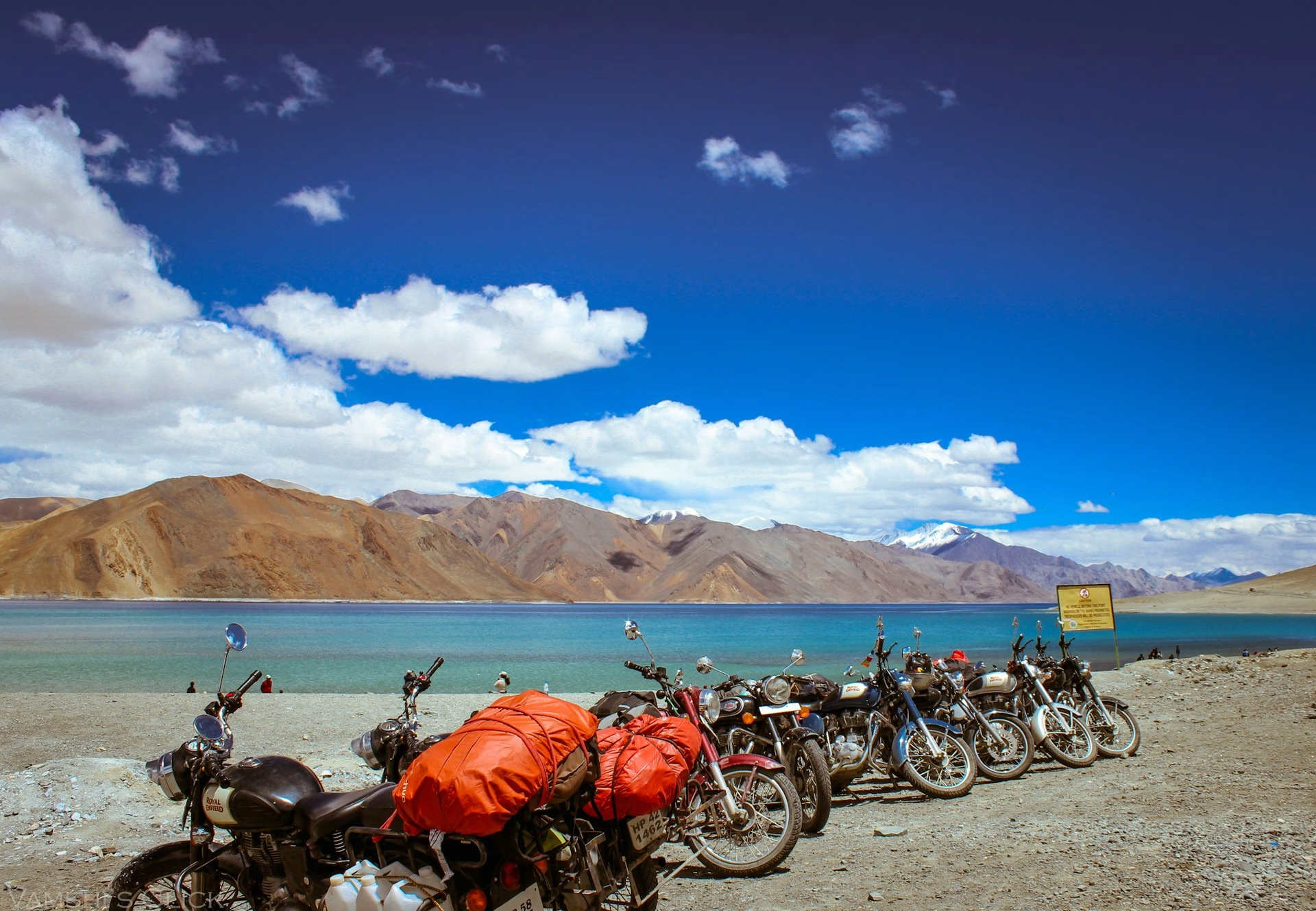
The lake is located in the Ladakh region. It lies at an altitude of 4,250 m (13,944 ft) and is one of the highest lakes in the world. The lake has a total area of about 604 km2 (233 sq mi) and is 5 km (3.2 mi) wide at its broadest point. Two-thirds of the lake lies in Tibet, and the remaining third is in India. The lake has an average depth of about 60 meters (196 ft), and its surface freezes entirely during winter. The lake also supports fish species, including snow trout—several monasteries near the lake, including the Thiksey Monastery and the Hemis Monastery.
Chang La Pass is located in the Ladakh region. It is situated at an altitude of 17,590 feet (5,360 m) above sea level, making it the third-highest motorable pass in the world. Located on the Leh-Manali highway, it is a popular tourist destination in the region. The pass offers the gateway to the Pangong Lake, a high-altitude lake in the Himalayas. The pass is also home to several Buddhist monasteries, including the famous Thiksey Monastery. The Chang La Pass is also popular among trekkers and adventure enthusiasts worldwide who want to explore this rugged terrain. The pass is also known for its extreme weather conditions, with the average temperature often dropping below -20°C.
Hanley Lake is located in Ladakh, India. It is an alpine lake in the Drass Valley, considered the gateway to the Kashmir Valley. It is situated at an altitude of 4,510 meters. The lake is home to various flora and fauna, including brown trout, snow trout, and migratory birds. The lake is also known for its stunning views and offers an excellent opportunity for adventure seekers to explore the beauty of Ladakh. The lake is believed to be an ancient glacial lake that formed over two million years ago. The lake is about 8 km long and is the highest lake in Ladakh. It is the largest lake in the Changthang region and one of the largest in India. The lake is a critical water source for the local wildlife and is a popular bird-watching and tourist destination. The lake also has several fish species, including brown trout (Salmo trutta) and snow trout (Schizothorax richardsonii). The lake also supports a population of migratory birds, including Bar-headed Geese, Black-necked Cranes, Ruddy Shelducks, and Great Cormorants.
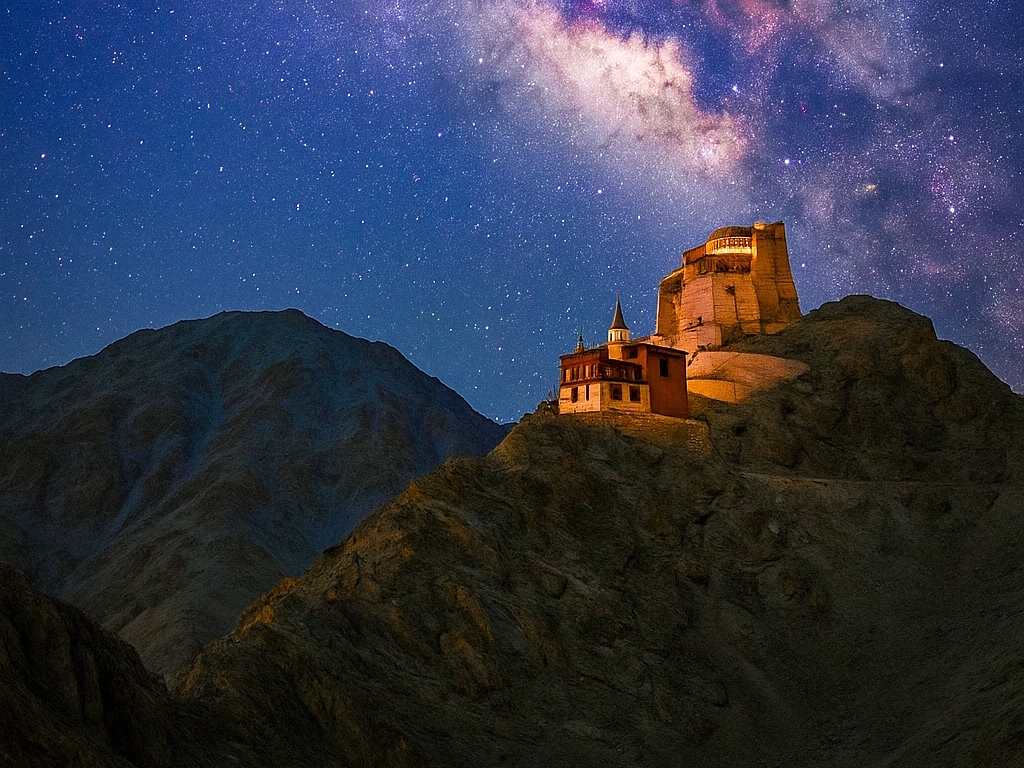
Hanle, in Ladakh, is renowned for its Indian Astronomical Observatory and breathtaking night skies. While the observatory offers minimal interaction and self-guided tours, the true highlight is stargazing. Homestays like Milky Way Homestay provide telescopes for planet viewing, and the Milky Way is stunningly visible after the moon sets, especially on no-moon nights (Amavasya).
Yes, Indian citizens require an (ILP) Inner Line Permit to visit Hanle, Ladakh, while foreign nationals are not allowed. To obtain an ILP, apply at the Deputy Commissioner's Office in Leh or online at lahdclehpermit.in. You'll need valid ID proof such as a passport, Aadhar, or voter ID. The ILP is usually valid for 21 days and must be shown along with your Leh arrival boarding pass. The office is open Monday to Saturday, with extended hours in spring and summer.
The Hanle Dark Sky Reserve offers an incredible opportunity to witness the Milky Way and starry skies like never before. It's one of the top attractions in Leh Ladakh, drawing visitors for its exceptional stargazing experiences that exceed expectations.
Hanle in Ladakh is India's first Dark Sky Reserve, known for its exceptionally dark skies and ideal stargazing conditions. With nearly 280 clear nights per year, the region's high altitude and isolation minimise light pollution. Key attractions include the Indian Astronomical Observatory, the Himalayan Chandra Telescope, and MACE, Asia's most extensive imaging Cherenkov telescope. Beyond stargazing, Hanle offers hiking, nature photography, and a rich cultural history with its monastery and prehistoric sites. In winter, it's a prime spot for spotting snow leopards.
Staying overnight at Pangong Lake is safe with proper preparation. Because accommodations are limited, reserving accommodations in advance is recommended to prevent overcrowding, which can disturb wildlife. Experts recommend acclimatising for at least 48 hours before visiting high-altitude areas. Additionally, illegal camping, restaurants, and dhabas near the lake have been removed following a court order, so it's best to avoid camping in the area.
Due to the high altitude of around 4350 meters, the oxygen level is 60 to 65 percent lower than expected. You may experience mild altitude sickness if you do rigorous activities like running. It's always advised to rest in Leh for at least 2 Nights to properly acclimate before heading for Pangong Lake.
You will need at least five Days to visit Pangong Lake. The nearest Airport or central city to Pangong Lake is Leh. However, you cannot directly visit Pangong Lake after landing at the Airport. Even though the distance between Leh and Pangong Lake is roughly 200 km, you have to stay in Leh for at least two nights to get the permit to travel to Pangong Lake.
The cost of visiting Pangong Lake depends on how you travel:
By Shared Taxi: ₹2,000-₹3,500 per person (round trip from Leh)
Private Taxi: ₹9,000-₹14,000 (ideal for groups)
Self-Drive Bike Rental: ₹1,500-₹2,500 per day (+ fuel)
Accommodation: ₹1,500-₹6,000 per night (budget to luxury camps)
Inner Line Permit (ILP): ₹400-₹600 per person
On average, a budget traveler can visit Pangong for around ₹4,000-₹7,000, while a comfortable trip might cost ₹10,000-₹15,000 per person.
Yes, in 4 Days, you can visit Ladakh, but you will have to skip either Nubra Valley or Pangong Lake because you will not get a permit for the next 2 days to visit these locations (Nubra and Pangong). So for the first 2 Days, you have to stay at Leh, then on the third Day, you can visit either Pangong Lake or Nubra Valley and return to Leh. On the 4th day, you can fly back from Leh Airport. Alternatively, you can enter Leh Via road. In that case, you can cover both the places (Nubra and Pangong) in 4 days because you will get the permit earlier as you have already acclimated by road travel.
Yes, you can visit Ladakh without a tour package. However, most places are very far from Leh, and these locations have no proper taxi or bus service. So, you are advised always to take a package from trusted travel companies like Uncia Trails. Because of a good cab and bike union in Leh Ladakh, you will get the same rates whether you book yourself or book via a travel company. The only advantage of booking with a travel company is that you can focus on the experience rather than deciding where to go and what to do each day in Ladakh.
Which is the best month to visit Leh?
Best Month to Visit Leh Ladakh
May to June: Best for road trips (Manali-Leh & Srinagar-Leh highways open)
July to September: Ideal for adventure enthusiasts (clear roads, perfect for biking)
October to March: Best for snow lovers & winter treks (Frozen Pangong & Chadar Trek
The official currency in Ladakh is the Indian Rupee (₹). ATMs are available in Leh but scarce in remote areas like Pangong and Nubra, so it is recommended that you carry enough cash. UPI payments are also acceptable, but they may not work at all the places due to signal issues.
| # | Discount group | From adult | To adult | Value |
|---|---|---|---|---|
| 1 | Discount (3 to 4 person) | 3 | 4 | 5% |
| 2 | Discount (5 to 6 person) | 5 | 6 | 15% |
| 3 | Discount (7 to 8 person) | 7 | 8 | 20% |
| 4 | Discount (8 to 9 person) | 8 | 9 | 25% |
| 5 | Discount (9 to 10 person) | 9 | 10 | 30% |
| 6 | Discount (10 to 12 person) | 10 | 50 | 35% |
Leave a review